

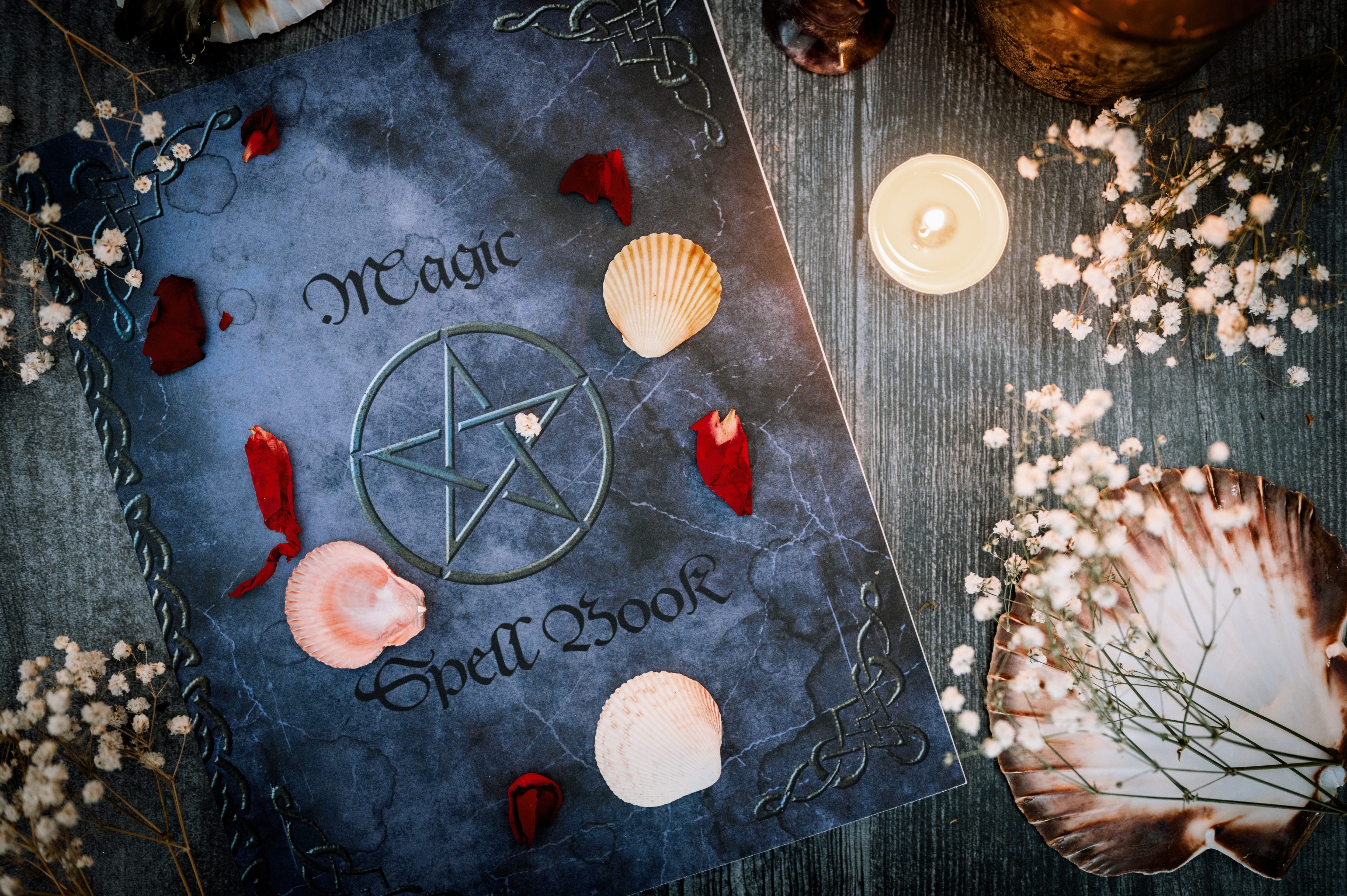
I am a witch. I have always been a witch. I just didn’t say it out loud for most of my life.
Three years ago, I finally “announced” it in a social media video. It wasn’t planned. I was in my pajamas. There was no fancy lighting or filter. It was a declaration that came from somewhere older than branding and fear. It was me finally stepping into my own power.
Last week, that video showed up in my memories. I watched it and felt this deep, quiet relief move through me. The relief of letting a part of myself come out of hiding and stay out.
Some people are called to it, some aren’t. And some are called but spend years trying to talk themselves out of it. Some people hear the word witch and immediately think of stereotypes. Green skin. Evil laughs. Hexes. Hysteria.
I get it. I spent way too much time worrying about what other people would think when they knew I do what I do and believe what I believe.
Witchcraft didn’t start for me as an aesthetic or a label. It started as a child in the woods behind my house, alone on purpose, listening in the way kids listen when they haven’t yet been taught to doubt themselves.
It looked like jars filled with rainwater, leaves, dirt, and whatever flowers I could find. It looked like “potions” I pretended were pretend, even though my whole body believed they mattered. It looked like talking to the forest, like it was a living thing, because it was. Spirits were not a concept back then. The woods had a voice.
I didn’t have language for any of it. I didn’t have rules or a practice. I had instinct.
Then I grew up, and the world did what it does. It got loud and skeptical. It got anxious about anything it can’t measure or monetize. Somewhere along the way, wonder gets treated like something childish we’re supposed to outgrow.
Still, I kept getting pulled back.
When I finally stepped into the word witch publicly, something inside me relaxed. Another part of me panicked, because stepping into the word also meant stepping into the noise that surrounds it.
And there is so much noise.
As soon as I claimed it, my brain did what my brain does with anything it loves.
It went full research mode.
If you’re also AuADHD, you already know this feeling. The moment you fall in love with a subject and your brain goes, ‘Perfect. I will now consume every piece of information that has ever existed about this. I will absorb thousands of years of knowledge by Tuesday. I will become a full-time scholar in 48 hours. I will not sleep. I will become the library.’
It’s funny, until it isn’t.
Because the shadow side of that kind of “devotion” is perfectionism. It’s the belief that you can’t do the thing until you understand every version of the thing. And witchcraft, as you may have noticed, has approximately twelve million versions.
So I did what so many eager, earnest witches do. I tried to learn how I “should” be practicing. And I got tangled in the noise. The lists. The rules. The labels.
Wiccan. Pagan. Traditional. Eclectic. Hedge. Kitchen. Green. Chaos. Ceremonial. Folk. Deity work. No deity work. Ancestor veneration. Land spirits. Lunar cycles. Elemental frameworks. Shadow work. Protection work. Baneful magic debates. Ethics debates. Gatekeeping debates. Everyone loudly declaring their way as fact.
Some of that is useful. Some of it is beautiful. Some of it is a map. A lot of it is also a pressure cooker.
Witchcraft is not a small field you can “complete.” It’s a vast web of cultures, folk traditions, religious structures, land-based practices, evolving lineages, stolen pieces, reclaimed pieces, family stories, political stories, and survival stories. Every answer leads to five more questions, and every path branches.
I see people online asking strangers, “Am I doing this right?” and my whole chest tightens, because I recognize what’s under the question. It’s not really about the candle or the herbs or the moon phase. It’s about permission and safety. It’s about fear of being shamed.
My question back is always the same.
Does it feel right to you?
Does your body soften when you practice?
Do you feel more grounded afterward?
Do you feel more connected to your own inner truth?
Because I don’t trust spirituality that requires you to abandon your own knowing. I don’t trust a practice that makes you smaller. I don’t trust a path where you have to ask permission from the internet before you light a candle. And I especially do not trust the version of witchcraft that tells you your power lives in what you can purchase.
Let’s talk about that part. Capes. Crystals. Cauldrons. Expensive decks. “Beginner witch” starter kits. Altars curated like magazine spreads. An entire marketplace built around the idea that you’re one purchase away from being a “real” witch.
Some of it is genuinely delightful. Humans love beauty. I love beauty. Tools can be meaningful. Objects can hold memory and intention. Still, capitalism knows how to sniff out longing. You don’t need all the shiny things to call yourself a witch. Take a walk in the woods and pick up stones and leaves. Visit second-hand stores. Listen to what calls your name. Those are your tools.
If you’re new here and this kind of writing is your home too, I’d love to have you. Subscribe to Bone & Bloom so you don’t miss what’s coming next.
A lot of people are tired and grieving. Many people feel powerless. The witch archetype has become a beacon for that. Power. Feminine rage. Reclamation. A way to stop shrinking. A way to feel less helpless inside a world that keeps setting fires. It makes sense that so many people are reaching for witchcraft right now.
Curiosity is a doorway. What matters is how we walk through it.
For me, witchcraft is not a costume I put on. It is not something I picked because it looks cool online. It’s a practice of relationship and remembrance.
It’s about my female ancestors, both bloodline and not. The women who lived and died without ever being allowed to call themselves powerful. The ones who healed anyway. The ones who endured anyway. The ones who were punished for being inconvenient, poor, outspoken, weird, alone, brilliant, or simply alive outside the lines.
It’s about researching folk traditions from the places my ancestors came from, with respect and humility. That means learning history, learning context, learning what belongs to whom, and learning where I don’t get to claim something just because I like it.
It’s also about honoring the land I walk on that is not mine. Living where I live means I am held by a landscape with its own stories, its own spirits, its own grief, its own resilience. Reverence has to include honesty. Relationship has to include listening. You don’t just take. You listen. You give. You show up with reverence.
Reading is a big part of my practice, and it always has been. History books. Nonfiction. Anthropology. Memoir. Folklore. Stories about persecution and power. Stories about how fear gets organized, and who gets labeled dangerous.
I read a lot of fiction too. Because fiction can be a doorway, too. Fiction can remind you of what you forgot. It can show you an embodied kind of magic that lives in kitchens and gardens, in old houses, and in daily devotion. Sometimes a “silly” story about inheriting a cottage and discovering your gifts is exactly what your nervous system needs to remember that wonder is still available. That enchantment still exists. That you haven’t been exiled from mystery just because life got heavy.
Another thing I can’t ignore is how desperate people are for magic right now. Desperation makes sense in a world like this. It also makes people vulnerable. Some people are so desperate for magic that they pay a lot of money for spells that do not work. They pay someone else to do their power for them. They outsource their longing, handing over their hope and their agency.
They’re told they have a curse, that they need cleansing, protection, one more service, one more payment, one more “urgent” ritual to fix what’s wrong with them. Magic is not something you outsource to someone on the internet because you’re afraid you’re doing it wrong. Your power isn’t locked behind a paywall. You do not need anyone else to create your magic. You are not magic-less until someone anoints you. If you feel the pull, you can begin.
Your sovereignty is still yours. If the pull is in you, you don’t need permission. Beginning can be simple. A candle on a Tuesday. A whispered word. A walk outside where you actually look at the sky. A quiet hello to the land. Putting your hand on your own chest and asking, ‘What do I actually believe?’
For me, AuADHD makes this both harder and more beautiful.
Harder, because the mind wants certainty before it will let you touch the sacred. Beautiful, because obsession can become devotion when you learn to pace it. Curiosity can become a lifelong apprenticeship.
I get distracted. I wander. I go quiet. I overthink things into the ground. Then I come back. That’s the difference with witchcraft compared to all the other shiny things my brain falls in love with. This one keeps calling me home. Every return feels more rooted. It sinks deeper into my bones, or maybe it reveals what was already there.
A truth I keep coming back to is this.
Witchcraft does not need to look impressive to be true. It needs to feel true.
So if you’ve felt that tug when you see a candle flame, or felt peace in the woods that you can’t explain, or felt like you were born with a language nobody taught you, please hear me.
You’re not doing it wrong because you don’t look like the witches on your screen. The craft isn’t a contest. It’s a relationship. A life of study and practice.
Your craft doesn’t need a shopping cart. Attention, time, and your presence matter most. Even if all you have is breath and a single flame.
If this path is in you, it survives messy seasons. It meets you in kitchens, in parking lots, in grief, in joy, in the five minutes you have before your brain runs away.
Study matters. The old ways matter. Names and roots and histories. The hard parts, too. Learn them. Let them change you.
Then watch for the trap. Learning can become a hiding place. It can become the rule you use to keep yourself from ever beginning. Begin before you feel ready. Practice while your bookshelf is still growing. Use what you have. Work where you are. Five honest minutes count. A single flame does too. One whispered sentence to the land is sometimes all it takes.
Here’s my claim, clear as a bell: I am a witch. I’m going to practice out loud, with reverence and rebellion, and I’m going to keep offering this permission slip to anyone who feels the pull.
What are you willing to claim today?
Start.
Love today,
Heather 🌸
I would so appreciate it if you would share what you are interested in reading by clicking the button below. It would really help me out.
Some of you have been asking me for more witch content, and I’ve been holding back because I didn’t want to contribute to the noise, and also, if I’m being honest, a part of me doesn’t want to turn my current readers off. Still, I am feeling the pull to share more if there is interest.